Key Takeaways
- One card tarot offers a simple, reflective practice using a single card to gain insight into personal questions or situations.
- Tarot consists of 78 cards divided into the Major Arcana, which includes 22 archetype cards, and the Minor Arcana, which consists of 56 cards focusing on daily life.
- The Major Arcana represents significant life themes, while the Minor Arcana captures everyday moments and emotions across four suits: Wands, Cups, Swords, and Pentacles.
- To practice one card tarot, shuffle the deck, set your intention, draw one card, and reflect on its meaning and your response.
- Learning tarot for beginners involves regular practice, starting with one card readings, and trusting your intuition alongside traditional interpretations.
There’s something magical that happens the first time you hold a tarot deck. The cards feel heavier than you expect.
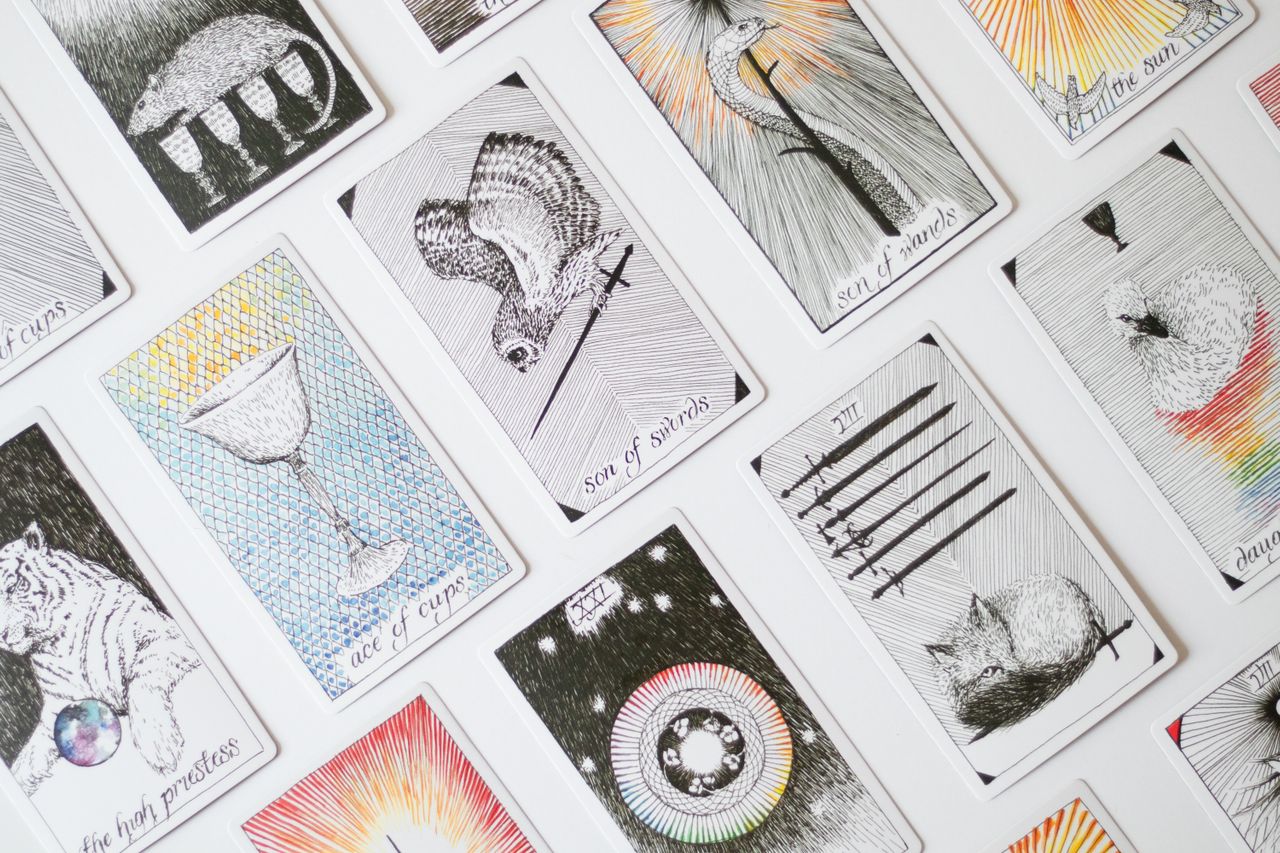
There’s something that happens the first time you hold a tarot deck. The cards are heavier than you expect. The imagery stranger, richer, more layered than a picture should be. If you’ve felt that pull but weren’t sure where to begin, one card tarot is your threshold — one card, one question, one moment of honest reflection.
What is tarot?
Tarot is a symbolic language of 78 cards, each carrying imagery and archetypes accumulated over centuries of use. A reader shuffles the deck, draws one or more cards, and works with their symbolism in conversation with a question, an intention, or simply the present moment.
Think of it less like a crystal ball and more like a mirror that shows the parts of yourself you’ve been walking past.
The Origins of Tarot
Tarot cards first appeared in 15th-century northern Italy as playing cards for a game called tarocchi — hand-painted, luxurious collections enjoyed by the aristocracy. They were not divination tools. They were simply games.
The shift toward esoteric use came in 18th-century France, when occultists began connecting the cards to astrology, numerology, and Kabbalistic symbolism. It was Western European occultism, not an ancient mystical tradition, that transformed tarot into a divinatory practice.
The deck that shaped modern tarot most profoundly is the Rider-Waite-Smith (1909), created by mystic A.E. Waite and illustrated by artist Pamela Colman Smith — whose name was long absent from early printings despite her foundational contribution. Most contemporary decks still draw from her visual vocabulary.


What are the tarot card divisions?

The Major Arcana (22 cards)
These 22 cards — numbered 0 through 21 — represent the great archetypal forces of human experience: transformation, loss, justice, death as transition, the cosmos itself. The Fool, The Magician, The High Priestess, The World. When a Major Arcana card appears, many readers treat it as a signal to pay deeper attention.
The Minor Arcana (56 cards)
Where the Major Arcana speaks in archetypes, the Minor Arcana speaks in moments — the emotions, conflicts, and material concerns of daily life. Four suits, each aligned with a classical element:
- Wands — fire; passion, will, creative drive
- Cups🍷 — water; emotion, intuition, the inner life
- Swords⚔️ — air; thought, communication, clarity hard-won
- Pentacles⭐ — earth; body, finances, the physical world
Each suit runs Ace through Ten, plus four court cards: Page, Knight, Queen, and King.
How does one-card tarot work?
A one-card tarot reading is as simple as the practice gets. Shuffle the deck, hold a question or an openness in your mind, draw one tarot card, and sit with what arrives. That single card becomes your lens for the day. Everytime you look at the image, notice what rises in you, then let the traditional symbolism meet your lived experience.
Step-by-step: how to do a one-card tarot reading
- Find stillness. A few quiet breaths and the willingness to be present — that’s enough.
- Set your intention. Ask something specific, or simply open with no question at all.
- Shuffle until it feels right. There is no wrong method.
- Draw one card. Cut the deck, pull from the middle — follow your instinct.
- Look before you read. What do you notice first? What feels like recognition?
- Read the meaning, then return to yourself. The traditional meaning is a starting point, not a verdict.
For more on building this practice: The Tarot Guru forum, Wanderlust’s one-card guide, and Mind Body Green’s overview are all worth bookmarking.
Tarot for Beginners FAQ
How many cards are in a tarot deck?
A standard tarot deck contains 78 cards, divided into the Major Arcana and the Minor Arcana. “Arcana” comes from the Latin arcanum, meaning secret or mystery.
What are the tarot card divisions?
The major arcana comprises 22 cards with the minor arcana having 56 cards. Where the Major Arcana speaks in archetypes, the Minor Arcana speaks in the material concerns of daily life.
Where do I find a deck with Major and Minor Arcana?
Any standard 78-card deck will contain both Arcana. The question is which deck opens something in you. The deck I keep returning to is the The Essential Tarot by Chlor Zarka Grinsir. It’s warm, richly symbolic, and deeply feminine. For interpretation, this hardcover guide has been living on my desk lately. It reads like a grimoire and I love it.


How can I learn tarot for beginners?
Begin before you feel ready. Tarot deepens through use, not study alone. A few principles to carry with you:
- Pull one card every morning and write a sentence about what you notice.
- Start with the Major Arcana — 22 cards is a meaningful beginning.
- Feel the card before you interpret it. Your gut response contains information the guidebook doesn’t.
- Read multiple sources and let them disagree. That tension is where your own understanding forms.
Something to Consider

Tarot has moved across centuries — from Milanese game tables to Parisian occult parlors to the hands of artists, mystics, and the quietly curious. Come to it honestly. Acknowledge the history, hold it lightly, and let the cards do what they do.
Draw one card–after cleansing your space’s energy, of course. See what the card asks of you.
I like to align my one card tarot readings with my nightly meditations. I go outside, gaze at the moon with a mug of herbal tea, remind myself what stage of the lunar cycle we’re in, what that means, and then pull a card aligned with my intention. It’s one of my favorite little rituals.