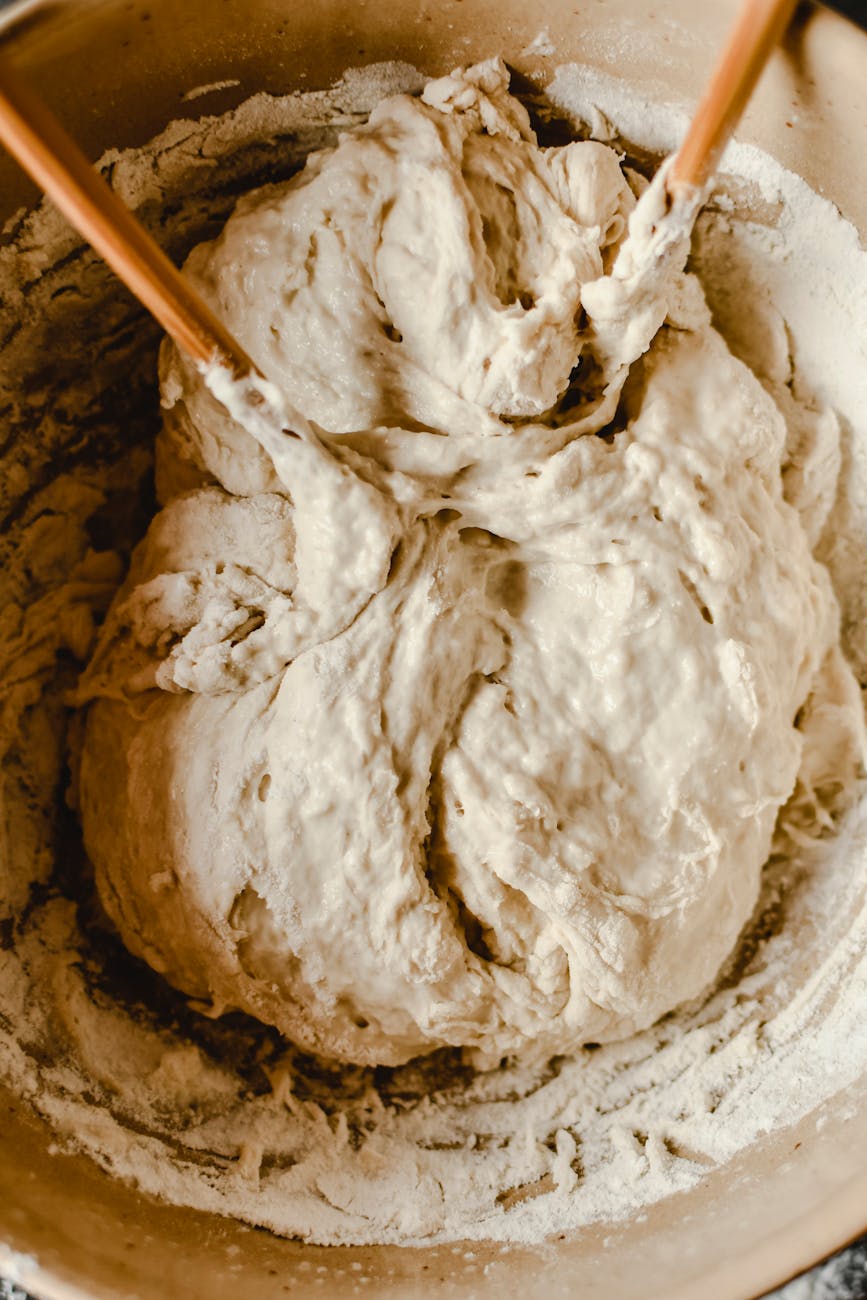
What is Sourdough Starter?
A sourdough starter is a living culture made from just flour and water. Over time, it captures wild yeast and beneficial bacteria from the environment, allowing you to bake naturally leavened bread—no commercial yeast required.
If you’ve ever wondered why sourdough tastes tangy, has a chewy crumb, and feels easier to digest, it all starts here.
And the best part? You can make it yourself in under a week.
How to Make a Sourdough Starter (Step-by-Step)
You only need two ingredients to get started:
- 50 grams whole wheat flour
- 50 grams warm filtered water
Mix them together in a jar until no dry flour remains. That’s it—your starter has officially begun.
Day 1–2:
Let the mixture sit loosely covered at room temperature. You may see a few bubbles or nothing at all—both are normal.
Day 3–7:
This is where things get active. You’ll begin feeding your starter daily (more on that below). It should start to rise, bubble, and develop a slightly tangy smell.
If you want a detailed beginner-friendly walkthrough, this guide from is a great reference.
You can also compare methods from and —all follow similar principles with slight variations.
Supplies That Make It Easier
You can make sourdough with what you have—but a few tools make the process much smoother:
- Glass jar (1 liter is ideal): A wide-mouth jar gives your starter room to grow.
- Digital food scale: Precision matters here. Measuring by weight ensures consistent feeding.
Pro tip: Consistency is more important than perfection. A scale just removes guesswork.
How to Feed Sourdough Starter
Feeding your starter keeps the yeast and bacteria alive and active. Here’s the simplest routine:
- Discard about half of your starter
- Add:
- 50g flour
- 50g warm water
- Stir until smooth
- Let it sit at room temperature
Repeat this once a day (or twice if your kitchen is warm or your starter is very active).
How Do You Know It’s Ready?
Your sourdough starter is ready to bake with when:
- It doubles in size within 4–6 hours after feeding
- It’s bubbly and airy
- It smells pleasantly tangy (not harsh or rotten)
A common test is the “float test”—a small spoonful should float in water. Not perfect, but a helpful indicator.
Common Starter Mistakes (and Fixes)
1. It’s not bubbling
Give it time. Starters can take 5–10 days depending on temperature.
2. It smells weird
Early stages can smell funky—this is normal. If it smells truly foul (like rot), start over.
3. You forgot to feed it
No problem. Just resume feeding—it’s surprisingly resilient.
4. It’s too runny or too thick
Aim for a thick pancake batter consistency. Adjust flour or water slightly if needed.
What Is Sourdough Discard?
Every time you feed your starter, you remove a portion—this is called discard.
It’s still full of flavor, just not strong enough to rise bread on its own.
Instead of throwing it away, you can use it in recipes.
Easy Sourdough Discard Recipes
Using discard is one of the best parts of maintaining a starter. It reduces waste and adds a subtle tang to everyday foods.
Here are my family’s favorite sourdough discard recipes:
- Pancakes or waffles
- Crackers
- Muffins
- Pizza dough
- Flatbreads
Discard works especially well in recipes that already use baking powder or baking soda.
How to Store Sourdough Starter
If you bake often (a few times a week):
→ Keep your starter at room temperature and feed daily
If you bake occasionally:
→ Store it in the fridge and feed once a week
To use a refrigerated starter:
→ Take it out, feed it, and let it become active again before baking.
Baking Your First Loaf
Once your starter is active, you’re ready to bake.
To learn how to make sourdough from your starter, read this full step-by-step guide here. It walks through shaping, proofing, and baking your first loaf step-by-step.
Why Sourdough Is Worth It

Yes, sourdough takes patience—but it gives you:
- Better flavor
- Natural fermentation
- Fewer additives
- A deeper connection to your food
Plus, once your starter is established, it can last indefinitely. People pass starters down for generations—yours can become part of your kitchen routine for years to come.
Something to Consider
Learning how to make a sourdough starter might feel intimidating at first—but it’s actually one of the simplest, most rewarding kitchen skills you can pick up.
Start with flour and water. Stay consistent with feeding. Use your discard creatively. Before long, you’ll have a thriving starter—and homemade sourdough to show for it.