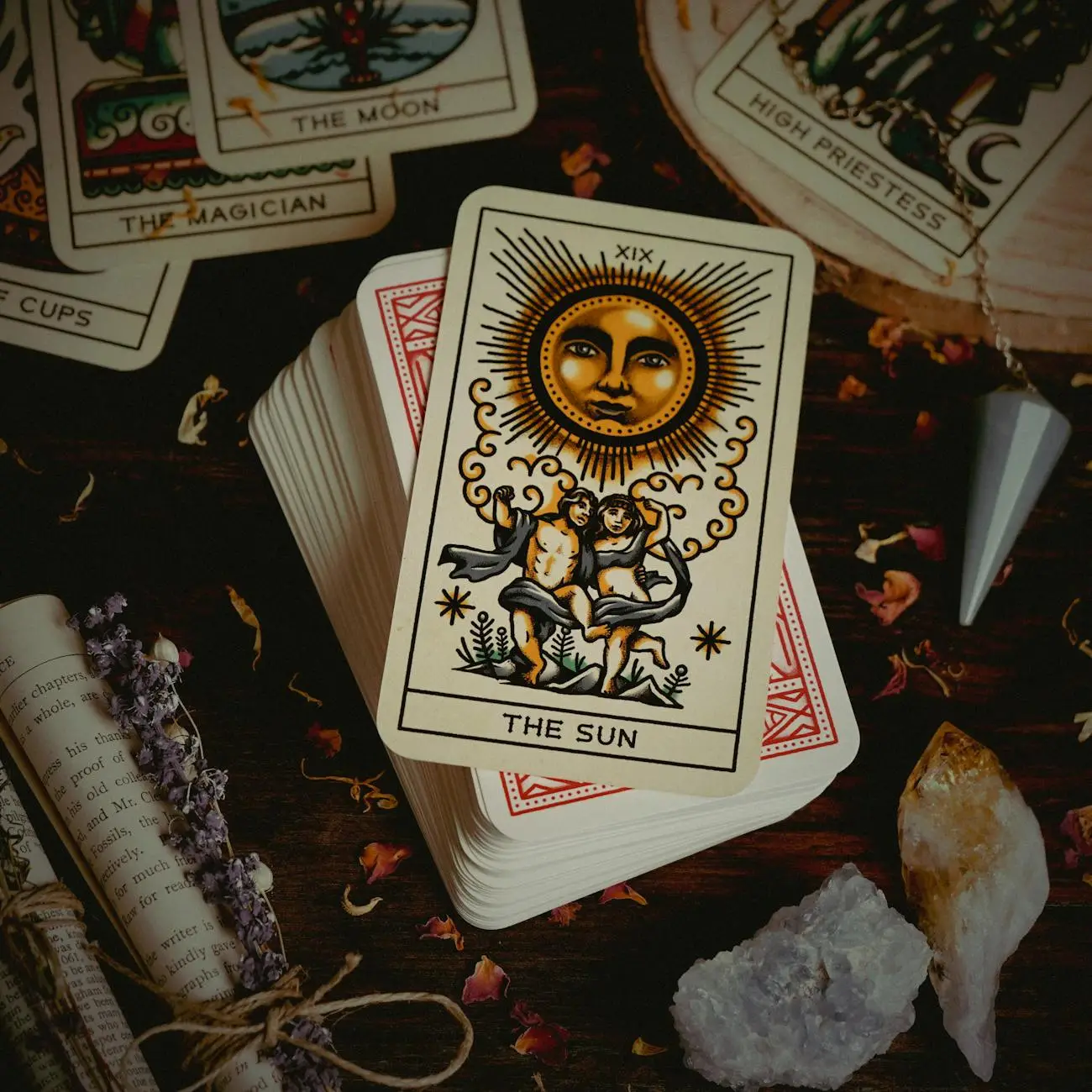
Let’s be real — if you’ve landed here, something drew you to tarot. Maybe your witchy friend did a reading that left your jaw on the floor. Maybe you’ve been eyeing a gorgeous deck for months and finally caved. Perhaps you’re going through something and the usual answers just aren’t cutting it. Whatever brought you here, welcome. You’re in the right place if you want to learn how to read tarot cards.
Tarot isn’t about predicting a fixed future or tapping into dark forces. It’s a tool for reflection — 78 illustrated cards that act like a mirror, helping you access clarity, insight, and the wisdom you already carry. People have been using them for centuries, and once you understand how they work, you’ll wonder how you ever made decisions without them.
This guide covers everything you need to know about reading oracle decks, how to shuffle tarot cards, how to use cards for yourself, and tips for picking your first deck. Let’s get into it.
A Brief History: Where Did Tarot Come From?
Surprise — tarot didn’t start in a mysterious fortune-teller’s tent. The earliest tarot decks showed up in 15th-century northern Italy, commissioned by wealthy families (the Viscontis, the Sforzas) as a card game called tarocchi. Think of them as the Renaissance equivalent of a really fancy, very symbolic card game.
It wasn’t until the 18th century that occultists in France started using tarot for divination, layering in symbolism from Kabbalah, astrology, numerology, and Hermetic philosophy. The deck most of us recognize today — the Rider-Waite-Smith — was designed in 1909 by artist Pamela Colman Smith (criminally underrated, honestly) under the direction of mystic Arthur Edward Waite. Smith’s fully illustrated scenes made the cards dramatically more accessible for intuitive reading, and it’s still the gold standard for beginners today.
Understanding the 78 Cards: Major & Minor Arcana
Every tarot deck has 78 cards split into two main groups. Getting familiar with this structure is the foundation of learning how to read tarot cards for beginners — once it clicks, everything else follows.
The Major Arcana (22 Cards)
These are the big-picture cards — The Fool, The High Priestess, The Tower, The World, and 18 others. They represent the major themes and turning points of a human life: transformation, awakening, love, loss, power, and rebirth. When a Major Arcana card shows up in your reading, pay attention. It’s pointing to something significant.
The Minor Arcana (56 Cards)
The Minor Arcana covers the everyday stuff — the emotions, decisions, conflicts, and small victories that make up a regular week. These 56 cards are split into four suits, each connected to one of the classical elements:
- Cups (Water 🌊) — feelings, relationships, intuition, the heart
- Pentacles (Earth🌍) — money, work, home, the physical world
- Swords (Air🌬️) — thoughts, conflict, communication, hard truths
- Wands (Fire🔥) — passion, creativity, ambition, drive
Each suit runs Ace through Ten, plus four Court Cards — the Page, Knight, Queen, and King — each representing a different personality or energetic archetype within that suit.
Choosing Your First Tarot Deck
The most common advice? Go with the deck that calls to you. And honestly, that’s good advice — but if you’re completely new to tarot, here’s a more specific take.
The Rider-Waite-Smith deck (or a modern version of it) is genuinely the best starting point. The scenes are fully illustrated rather than just symbolic, which makes intuitive reading so much more natural. Once you understand its visual language, any deck becomes easier to learn. Think of it as the baseline all other decks are in conversation with.
Once you’re comfortable with the basics, the world of tarot decks opens up beautifully. There are decks for every aesthetic, identity, and tradition — from minimalist to maximalist, from cat-themed to celestial, from traditional to wildly reimagined.
| 🃏 Recommended Tarot Decks for Beginners |
|---|
| Rider-Waite-Smith Tarot (Original) The classic. Fully illustrated, deeply symbolic, and the foundation for most tarot learning resources. A must-have for any serious beginner. BUY NOW |
| Modern Witch Tarot A stunning feminist reimagining of the Rider-Waite deck with diverse, contemporary figures. Keeps the classic symbolism while feeling fresh and inclusive. BUY NOW |
| Light Seer’s Tarot Beautifully illustrated with a wide range of human experiences represented. One of the most beloved modern decks for beginners and experienced readers alike. BUY NOW |
| The Green Witch’s Oracle Deck Nature-inspired, minimalist, and deeply intuitive. A great choice once you’ve got the basics down and want something more personal and symbolic. BUY NOW |
How to Prepare for an Oracle Card Reading

You don’t need an altar, crystals, or a specific ritual to read tarot — though any of those things can help if they resonate with you. What you actually need is a quiet mind and a real question.
- Find somewhere quiet where you won’t be interrupted
- Hold your deck and take a few slow breaths — this is less woo-woo than it sounds; it genuinely helps you focus
- Get specific about what you want clarity on. Vague questions get vague answers. ‘What should I know about my relationship with X right now?’ is better than ‘tell me about love’
- Light a candle, play some music, set a vibe — or don’t. There’s no wrong way to create the right headspace for you
How to Shuffle Tarot Cards
One of the most common questions for new readers: how do you actually shuffle tarot cards? The answer is simpler than you think — there’s no single right method, and you truly cannot do it wrong.
The most common shuffling styles are: the overhand shuffle (easiest and gentlest on the cards), the riffle shuffle (more traditional playing-card style — fine but can bend cards over time), and the ‘chaos shuffle’ where you spread all the cards face-down on a flat surface and swirl them around. That last one feels especially good if you want to really mix the energy.
Shuffle while holding your question in mind. You can shuffle for a set number of times, or just go until it feels right — until something tells you to stop. Some readers draw the top card; others fan the deck and pull whichever card their hand is drawn to. Some readers watch for ‘jumper’ cards — cards that leap out of the deck while shuffling — and treat those as especially significant messages.
One more thing: if a card comes out upside-down during the shuffle, that’s called a reversed card. It carries a subtly different (often more internalized) version of that card’s energy. Some readers work with reversals; others always flip cards upright. Neither approach is more correct — just pick one and be consistent while you’re learning.
| ✨ Quick Tip If you’re new to shuffling a large tarot deck, the overhand method is easiest on both you and the cards. Tarot cards are bigger than playing cards, so riffle shuffles can cause bending over time. |
How to Use Tarot Cards: Common Spreads

A tarot spread is the pattern in which you lay your cards, with each position representing a specific question or aspect of your situation. Learning a few tarot spreads is one of the fastest ways to go from pulling random cards to doing real, structured readings.
The One-Card Draw
One card tarot is the best place to start. Pull a single card each morning as a daily reflection — a word of guidance, a theme to carry into the day, or just a prompt to think about. It’s the fastest way to build familiarity with your deck, and it takes literally two minutes.
The Three-Card Spread
The most versatile tarot spread there is. Three positions, endlessly adaptable. Classic interpretations include:
- Past / Present / Future
- Situation / Action / Outcome
- Mind / Body / Spirit
- What to embrace / What to release / What to watch for
You can customize the three positions for any question.
The Five-Card Spread
A great step up from three cards. Common formats include: The situation / What’s helping / What’s blocking / What to focus on / The likely outcome. More nuance, still manageable for beginners.
The Celtic Cross (10 Cards)
The gold standard of full readings. Ten cards examine a situation from every angle: the core issue, crossing energy, past and future influences, external factors, your inner state, hopes and fears, and the likely outcome. It looks intimidating at first — give it a try once you’re comfortable with individual card meanings and you’ll see why it’s stood the test of time.
Oracle Cards vs. Tarot: What’s the Difference?
If you’ve been shopping for a tarot deck, you’ve almost certainly come across oracle decks too. How is tarot different from oracle cards? Here’s the short version: tarot has rules, oracle decks don’t.
Every tarot deck in the world follows the same structure: 78 cards, Major Arcana, Minor Arcana, four suits, court cards. That consistency is actually one of tarot’s superpowers — it means every book, course, and guide you ever read applies to your deck, regardless of which one you own.
An oracle deck, on the other hand, is completely freeform. An oracle deck can have 30 cards or 80. It can be organized around animals, planets, affirmations, goddesses, archetypes — whatever the creator envisioned. There’s no standard structure, which means there’s also no universal meaning system to learn. Each oracle deck comes with its own guidebook, and that guidebook is your primary reference.
Plenty of readers use both — pulling an oracle card alongside a tarot spread for an extra layer of insight, or using an oracle deck on days when tarot feels like too much structure. There’s no rule that says you have to choose.
| 🔮 Beloved Oracle Decks Worth Exploring |
|---|
| The Work Your Light Oracle Deck Goddess-forward, luminous, and deeply affirming. One of the most popular oracle decks on the market for a reason. SHOP NOW |
| Sacred Forest Oracle Cards Nature-based, calming, and visually stunning. Particularly beautiful for shadow work and grounding readings. SHOP NOW |
| Starseed Oracle Deck Cosmic, spiritual, and absolutely gorgeous. Perfect for readers who feel drawn to astrology and star lore alongside their card practice. SHOP NOW |
Reading the Cards: Learning to Trust Yourself
Here’s the thing nobody tells you when you’re learning how to read tarot cards for beginners: you already have everything you need. The books, the guides, the keyword lists — they’re all helpful, and you should absolutely use them. But the most powerful tool in your reading isn’t the reference material. It’s you.
When a card lands in front of you, try this before reaching for a meaning: just look at it. What’s happening in the image? Who’s there, and what are they doing? What colors dominate? What’s the mood? What does your gut say, before your brain starts translating?
That instinctive response — whatever comes up in the first three seconds — is almost always pointing at something true. Traditional meanings give you the grammar. Your intuition writes the sentence.
The more you practice, the more the cards start to feel like fluent language. You’ll start to notice which cards show up when you’re avoiding something, which ones arrive when you’re on the right track, and which combinations light something up in your chest that you can’t quite put into words. That’s the art of tarot. It takes time, and it cannot be gotten wrong.
| ✨ Remember You are the reader. The cards illuminate — they don’t dictate. Every meaning you encounter in books, guides, or articles like this one is a starting point, not a verdict. Trust what resonates. Leave what doesn’t. Your intuition is the most powerful tool in the deck. |
Keeping a Tarot Journal
If you want to learn faster, keep a tarot journal. After every reading, jot down: the date, your question, which cards came up, what you noticed in the imagery, how the meaning felt in the context of your actual life — and then, later, what actually happened.
Over time, you’ll start to notice patterns that are completely personal to you. Certain cards that mean something specific in your life. Combinations that reliably point to the same themes. A relationship with the deck that’s entirely your own.
You can do this with a paper journal or simply in the notes app on your phone. It’s not the method that matters, just the intention.
Common Myths About Tarot
- Tarot doesn’t predict a locked-in future — it reflects possibilities and energies in motion. You always have agency.
- You absolutely can read tarot for yourself. The idea that you can only receive a reading from someone else is a myth.
- You don’t need to be psychic. Tarot requires presence, curiosity, and a willingness to sit with whatever comes up.
- The Death card doesn’t mean someone is going to die. It almost always represents transformation, endings, and new beginnings.
- There’s no single ‘right’ deck. The best tarot deck is the one you’ll actually use — don’t let anyone tell you otherwise.
| 📚 Tarot Books We Love for Beginners |
|---|
| Holistic Tarot by Benebell Wen The most comprehensive tarot reference book available. Detailed, scholarly, and deeply respectful of tarot’s history and traditions. An investment worth making. SHOP NOW |
| Tarot: No Questions Asked by Theresa Reed Practical, direct, and refreshingly no-nonsense. Great for readers who want to get to the point without the mystical fluff. SHOP NOW |
| 78 Degrees of Wisdom by Rachel Pollack A classic that goes deep into the symbolism and meaning of all 78 cards. Beautifully written and endlessly rereadable. SHOP NOW |
| The Ultimate Guide to Tarot by Liz Dean Accessible, well-organized, and gorgeous to look at. A great all-in-one reference for beginners who want everything in one place. SHOP NOW |
Frequently Asked Questions
Here are answers to the questions we hear most from readers who are just getting started.
The most common tarot spreads are: the One-Card Draw (a single card for daily reflection or a quick answers), the Three-Card Spread (often used for Past/Present/Future or Situation/Action/Outcome), the Five-Card Spread (adds more nuance with positions for context, challenges, and outcome), and the Celtic Cross (a 10-card spread that’s the most thorough and widely used format for a full reading).
No. Tarot cards are a tool for self-reflection — illustrated cards that prompt introspection, pattern recognition, and clarity. They have no inherent power to cause harm. The concern about tarot being ‘evil’ stems largely from religious traditions that associate any form of divination with forbidden spiritual practices.
An oracle deck is a card deck used for guidance and reflection — similar in purpose to tarot, but without the structured system. While every tarot deck in the world has 78 cards, an oracle deck can have any number of cards and follow any theme the creator chooses. Each oracle deck comes with its own guidebook rather than drawing on a universal meaning system.
The most popular method is the overhand shuffle — simply transfer cards from one hand to the other in small packets, repeatedly, while holding your question in mind. You can also spread all the cards face-down on a flat surface and swirl them around (the ‘chaos shuffle’). Shuffle until it feels right to stop — whether that’s 3 times or 30. If a card falls out during shuffling, many readers treat it as an especially significant message.